 Abisko.tours
Home › Guides › Abisko Weather: What Is It Like Each Month?
Abisko Weather: What Is It Like Each Month?
Abisko weather is mildest from June to August, with highs of 13.8°C to 17.5°C, and clearest for the northern lights in November, when 51% of evenings had 2 or more clear hours. The coldest months are January and February, with average lows near -14°C.
Quick answer Best months and what to expect
Abisko averages a high of -5.8°C and a low of -14.0°C in January, and a high of 17.5°C in July. The station records about 334 mm of precipitation a year, so skies are often clear.
Key takeaways
- Aurora season: evenings from September to early April, with 51% clear in November, as the Abisko tours chases run.
- Cold: January and February lows average -14.0°C and -14.1°C, so book a guided evening such as The Ultimate Aurora Photo Adventure.
- Snow activities: Abisko: Snowmobile Sightseeing Tour costs $94 per person for 2 hours.
- Summer: the midnight sun begins on 25 May and runs to about mid-July.
How cold does it get in Abisko?
Abisko's average winter low is about -14°C in January and February, and individual nights are colder.
These are averages from SMHI's Abisko weather station for 1996-2025.
Winter temperatures
January averages a high of -5.8°C (22°F) and a low of -14.0°C (7°F). February averages -5.7°C (22°F) and -14.1°C (7°F). December is -3.5°C (26°F) and -10.9°C (12°F).
Kiruna Lapland gives -20 degrees as usual for Kiruna in January and says -30 is not uncommon. That is Kiruna, 98 km away, but plan on the colder end for a night out under the sky. February averages about -15 degrees there, and March is around -10.
STF's Fjällboden rents a winter overall and warm boots for 400 SEK for the first day and 200 SEK for each following day. Guests on the Aurora Sky Station Night Visit get overalls and boots included.
Sources: SMHI, Visit Kiruna Lapland.
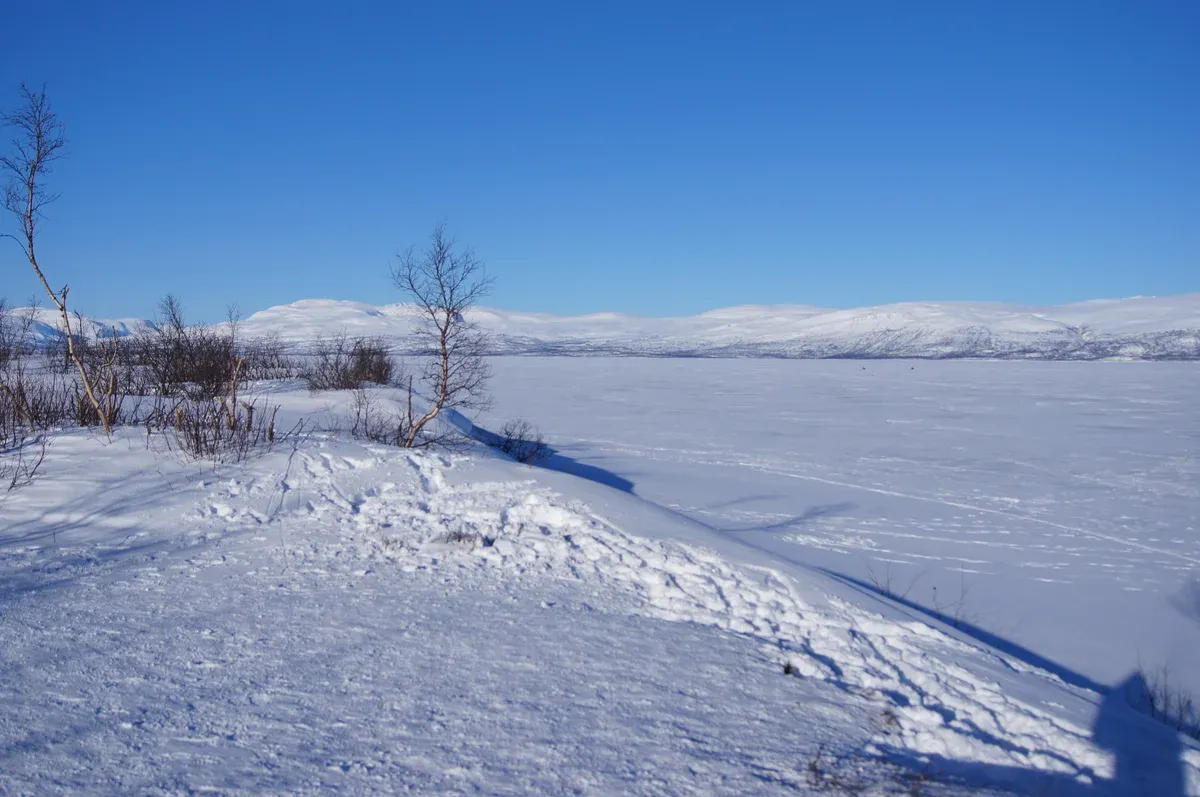
Torneträsk in winter near Abisko. Photo: Arjoopy, CC BY-SA 4.0, via Wikimedia Commons
What is the weather in Abisko each month?
It runs from a -14.1°C February low to a 17.5°C July high, with the clearest evenings from November to January.
The table combines SMHI's temperature and rain records with its hourly cloud cover for September to April evenings.
Month-by-month table
Clear evenings are those with at least 2 hours of clear or mostly clear sky between 18:00 and 02:00 (2019-2026). Precipitation shows the monthly total and the days with 1 mm or more. Daylight figures marked Kiruna come from Kiruna Lapland.
| Month | High / low | Precipitation | Clear evenings | What it means |
|---|---|---|---|---|
| January | -5.8°C / -14.0°C | 26 mm, 6.6 days | 48% | Kiruna daylight grows from about 40 minutes to almost 6 hours. Aurora peak per Visit Sweden. |
| February | -5.7°C / -14.1°C | 21 mm, 6.2 days | 45% | Kiruna daylight 6 to 9.5 hours. Ski resorts open at month end. |
| March | -2.4°C / -10.4°C | 18 mm, 5.0 days | 44% | Kiruna daylight 10 to 13.5 hours. Milder than January. |
| April | 2.5°C / -5.1°C | 14 mm, 4.1 days | 42% | Lights are occasional into early April. The driest month. |
| May | 8.2°C / 0.4°C | 19 mm, 4.5 days | n/a | Midnight sun from 25 May. Fewer activities in early May. |
| June | 13.8°C / 5.2°C | 34 mm, 6.4 days | n/a | Midnight sun. Sky Station summer evenings start 14 June. |
| July | 17.5°C / 8.5°C | 59 mm, 9.1 days | n/a | The wettest month. Midnight sun to about mid-July. |
| August | 15.3°C / 7.2°C | 44 mm, 8.1 days | n/a | Lights can show as early as late August. |
| September | 10.3°C / 3.4°C | 33 mm, 7.4 days | 39% | Aurora season opens. |
| October | 3.6°C / -2.0°C | 23 mm, 6.3 days | 44% | Sky Station evenings start 19 October. Fewer activities in October. |
| November | -1.0°C / -7.4°C | 19 mm, 5.4 days | 51% | The clearest evenings. Kiruna daylight falls from 7 to 3 hours. |
| December | -3.5°C / -10.9°C | 24 mm, 6.8 days | 48% | Last sunset before polar night around 5 December. |
Sources: SMHI, Visit Kiruna Lapland, Visit Sweden.
Tours That Fit the Weather
One tour for a clear winter night and one for snow by day.
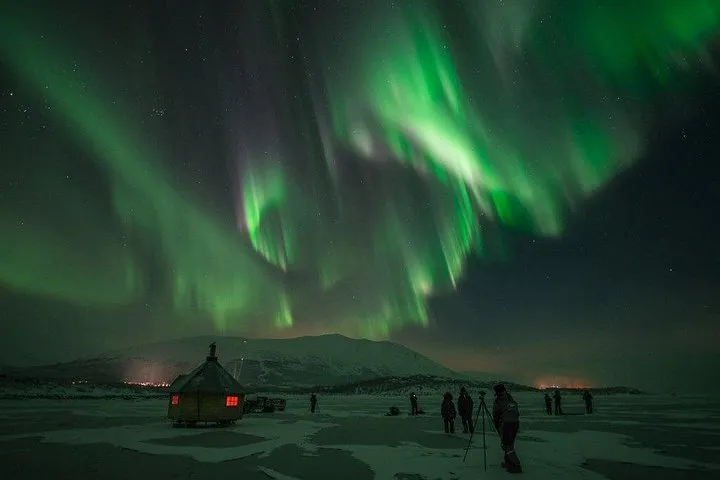 from $162.30
Photo tour
The Ultimate Aurora Photo Adventure
Camera, tripod and overalls included, groups of 8 per guide, with no fixed return time.
Check Availability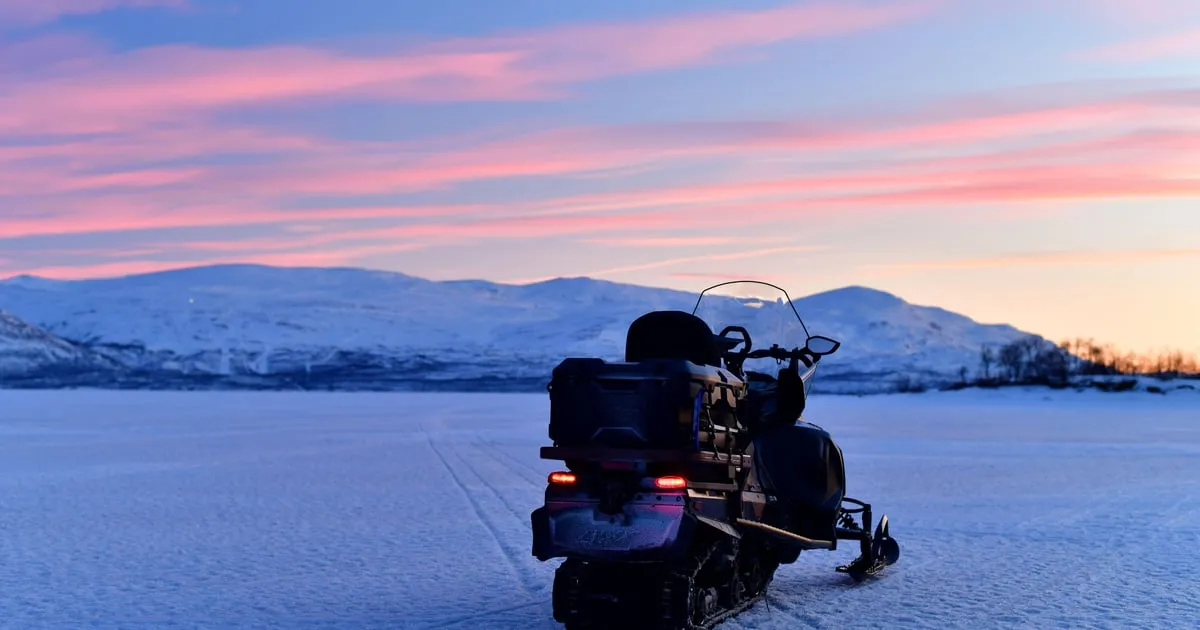 from $94
Abisko: Snowmobile Sightseeing Tour
Daytime snowmobile ride where children from 7 can come in the sled.
Check AvailabilityIs there snow in Abisko now?
This page cannot show today's snow cover, so check a daily forecast the day you travel, and know the pattern: winter snow, bare ground in summer.
Snow follows the temperature curve in the table.
What snow means for activities
From November to March the monthly highs stay below zero. Ice-skating on Torneträsk is possible when the ice forms, around December. Snowmobiles may only be driven on well snow-covered ground, and in the mountains on marked trails.
In May the high is 8.2°C and the low is 0.4°C. For a live reading, use a 10-day table such as Yr or a 14-day forecast such as timeanddate, then book a snow activity like the Abisko: Snowmobile Sightseeing Tour, which carries free cancellation 24h. To drive a snowmobile you pick a driving option at booking.
Sources: SMHI, Länsstyrelsen Norrbotten, Sweden's National Parks.
How much rain and snow does Abisko get?
Abisko records about 334 mm of precipitation a year, with July the wettest at 59 mm and April the driest at 14 mm.
Sweden's National Parks puts the annual average at 300 millimetres, so it is often sunny.
Why skies are clear
The park service and SMHI both give low figures. Swedish Lapland says Abisko gets less rainfall than the rest of Sweden, and that you often have a blue hole even if the rest of the sky is covered. Kiruna Lapland ties it to a rain shadow from the Atlantic's humid air.
For a summer visit, July has 9.1 days with 1 mm or more, so pack a rain layer.
Sources: SMHI, Sweden's National Parks, Swedish Lapland, Visit Kiruna Lapland.
How many hours of daylight does Abisko get?
Daylight falls to nothing around 5 December and the midnight sun begins on 25 May.
Day length changes faster than the temperature.
Polar night and midnight sun
SMHI gave Abisko's last sunset before polar night as 11:52 on 5 December in 2020, and the date shifts slightly each year. The midnight sun begins in Abisko on 25 May. STF gives the period as about 25 May to mid-July.
Kiruna Lapland says December has no daylight above the horizon in Kiruna, and January grows from about 40 minutes to almost 6 hours. SMHI says the sun rises about 6 minutes earlier on a mountain roughly 1,000 m above the surrounding terrain, so a high station sees the sun first.
Sources: SMHI, Visit Kiruna Lapland.
When to see the Northern Lights in Abisko?
From September to early April, with the best window from November to March on clear evenings from 18:00 to 02:00.
Weather decides the night, so use the clear-evening shares from the table.
Best months and hours
November had the highest share of clear evenings at 51%, then December and January at 48%. Visit Sweden says the lights are best from 18:00 to 02:00 and most intense around 22:00 to 23:00. Swedish Lapland gives 21:00 to 02:00 as the ideal time.
The Aurora Sky Station evening programme runs 19 October to 27 March, 21:00 to 01:00. For a chase from your hotel, see The Ultimate Aurora Photo Adventure or the full Abisko tours list. No source can promise a night, and the station itself says the lights are not guaranteed.
Sources: SMHI, Visit Sweden, Swedish Lapland.
Is it worth going to Abisko?
Yes for northern lights, hiking and the midnight sun, and no if you want a warm winter.
The weather record shows why people come in both winter and summer.
Winter or summer
Winter gives a high share of clear evenings, the Aurora Sky Station and skiing and snowshoeing. Summer gives highs up to 17.5°C and the midnight sun. Abisko National Park is open all year because the E10 road and the railway both pass through it.
Fewer activities run from early May to early June and in October, so those weeks are the weakest for a first visit.
Sources: SMHI, Sweden's National Parks.
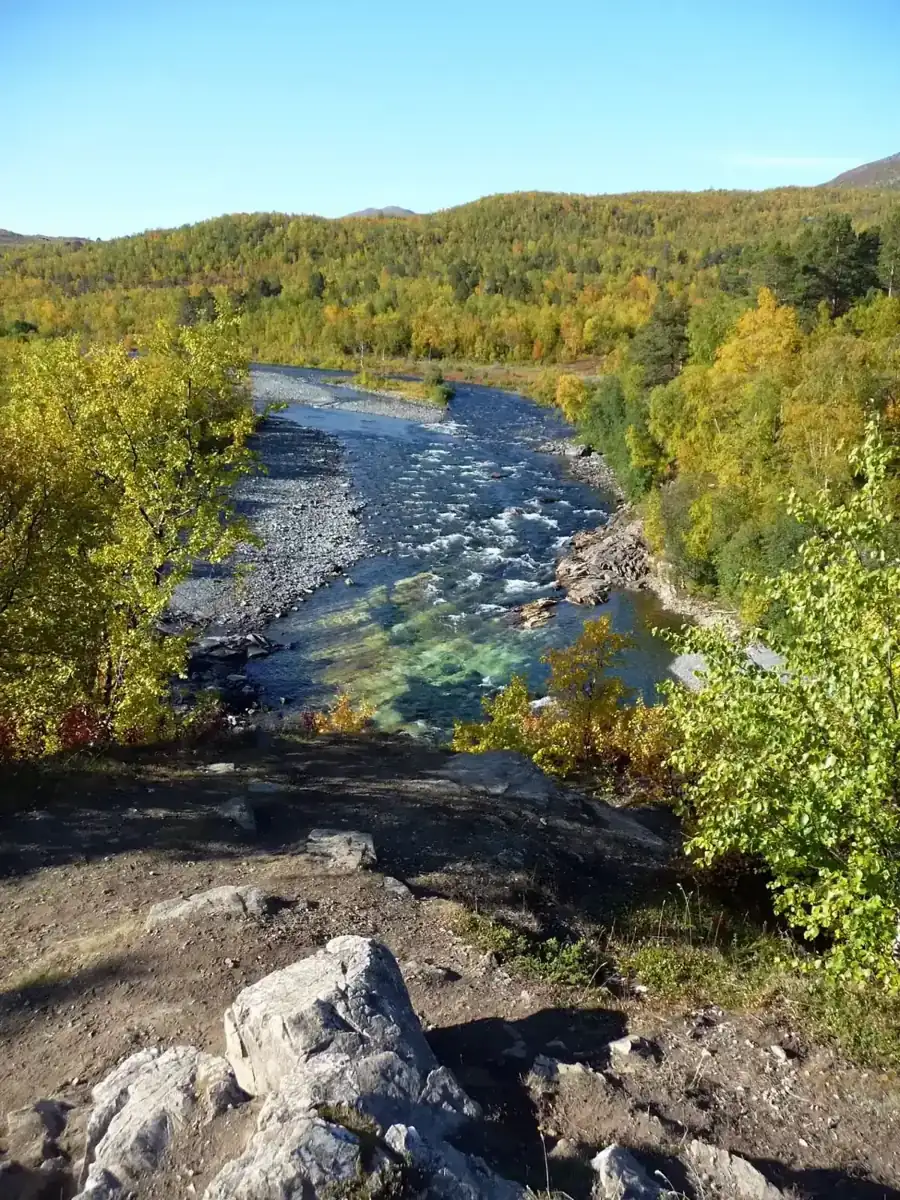
Autumn colours along the Abiskojåkka in Abisko National Park. Photo: Robin van Mourik, CC BY-SA 2.0, via Wikimedia Commons
Abisko Weather FAQ
What is the weather in Abisko in November?
November averages a high of -1.0°C and a low of -7.4°C, and 51% of evenings are clear. See The Ultimate Aurora Photo Adventure for an evening out.
What is the weather in Abisko in December?
December averages -3.5°C and -10.9°C with 24 mm of precipitation, and the last sunset is around 5 December. Check the Abisko tours options for polar-night evenings.
What is the weather in Abisko in July?
July averages 17.5°C and 8.5°C, with 59 mm of precipitation over 9.1 days. Midnight sun runs to about mid-July, as Abisko tours notes.
Is there an Abisko weather 14 day forecast?
Forecast sites such as timeanddate show 14-day outlooks. Pick a flexible option like the Abisko: Snowmobile Sightseeing Tour, which carries free cancellation 24h.
What is the weather in Abisko in September and October?
September averages 10.3°C and 3.4°C, and October 3.6°C and -2.0°C. The Abisko tours aurora season is open in both months.
More Guides
- Abisko National Park: What Can You Do There in Winter and Summer?
Abisko National Park in 2027: trails, the canyon, aurora and midnight sun, park rules and guided hikes by season. Plan your visit.
- Abisko Dog Sledding: Husky Hikes or a Real Sled Ride?
Compare 3 Abisko dog sledding and husky tours of 3 to 7 hours for 2027. See ride or drive rules and season. Check availability.
- Abisko Hotels: Where Should You Stay in Abisko?
Abisko hotels 2027: 4 bases compared, from a 10-minute walk to the chairlift to Björkliden. Pick your base first.